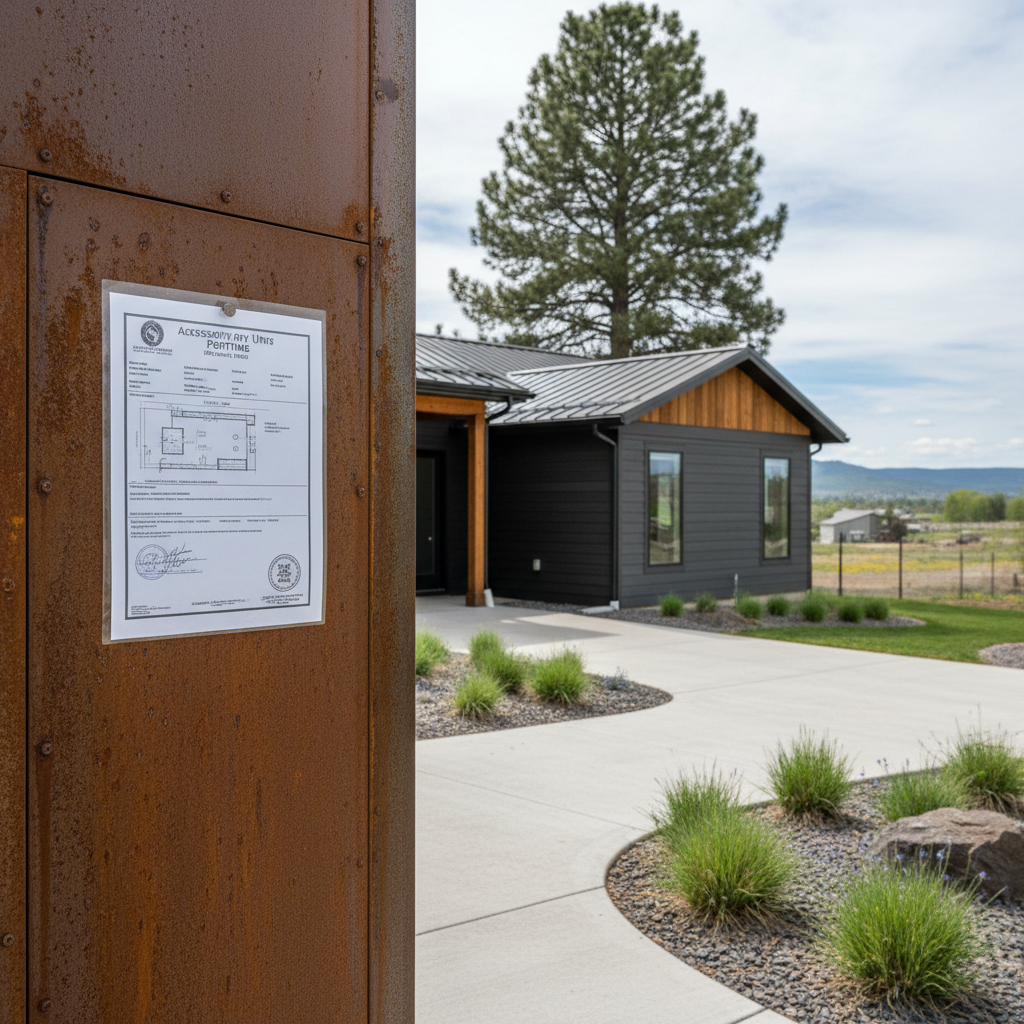
Building an Accessory Dwelling Unit (ADU) on your property here in Eagle is a smart move for a lot of reasons. But let's be honest: the permitting process? That can be a real headache if you don't know what you're doing. I've seen folks get completely bogged down, frustrated, and even make some pretty costly mistakes just trying to figure out the rules.
That's why I'm going to tackle the most common questions I hear about ADU permits from homeowners, right here in our community. I'm not going to sugarcoat anything; I'm just giving you the facts, based on what I deal with every single day.
Do I really need a permit for my ADU? Can't I just build it?
Oh, you absolutely need a permit. There's just no way around it in Eagle, or anywhere else in Idaho, for that matter. Building an ADU without the proper permits is a huge risk. You're looking at potential fines, having to tear down what you've built, and a massive headache if you ever try to sell your property. Lenders won't touch it, and it'll show up as an unpermitted structure — a big red flag, that is. The City of Eagle has specific zoning ordinances and building codes. These cover everything from structural integrity to fire safety and utility connections. They aren't just suggestions, you know? They're laws, designed to keep everyone safe and maintain property values. So, yes, you need a permit. Seriously, don't even think about skipping it.
What's the difference between a building permit and a zoning permit for an ADU?
This is a common source of confusion. Think of it this way: a zoning permit (or zoning approval, sometimes it's just part of the overall application) is about whether you're even allowed to build an ADU on your specific property. This is all according to the city's land use rules. It covers things like how far back from property lines you need to be, the maximum size, lot coverage, and if an ADU is even permitted in your residential zone. The City of Eagle has different zones, and what's okay in an R-2 zone might not fly in an R-1. Once zoning says, "Yes, you can build an ADU here," then you move on to the building permit. The building permit is all about the actual construction. It makes sure your plans meet the Idaho Building Code for structural integrity, electrical, plumbing, mechanical, energy efficiency, and fire safety. You'll submit really detailed architectural and engineering drawings for this one. Both are critical, and you usually need zoning approval before the building department will even look at your construction plans.
How long does the ADU permitting process usually take in Eagle?
This is the million-dollar question, isn't it? And there's no single answer. It really depends on a few things: how complete and accurate your initial submission is, how busy the city's planning and building departments are, and whether your project needs any special reviews. I've seen simple, well-prepared applications sail through in a few weeks for the initial zoning review, then another 4-8 weeks for the building plan review. But if there are issues, incomplete drawings, or if you're in a trickier spot — like near a flood plain or in an older part of Eagle where infrastructure might be an issue — it can easily stretch to several months. A good rule of thumb is to factor in at least 2-4 months for the permitting phase before you even break ground. Don't rush it; getting it right the first time saves a lot of time and money in the long run.
What kind of drawings and documents do I need to submit?
You'll need a pretty comprehensive package. For zoning, you'll typically need a site plan. This shows your existing home, the proposed ADU, property lines, setbacks, driveways, utility easements, and landscaping. For the building permit, it gets much more detailed. We're talking architectural drawings (floor plans, elevations, sections), structural engineering plans (especially important with our clay soils in some parts of Eagle), mechanical, electrical, and plumbing (MEP) plans, energy calculations, and sometimes even a geotechnical report if the soil conditions are questionable. You'll also need applications filled out, proof of property ownership, and often a contractor's license and insurance information. It's a lot, which is why working with experienced professionals like us at Eagle ADU Solutions is so beneficial; we know exactly what the city wants to see.
Will building an ADU require me to upgrade my utilities (water, sewer, power)?
It's definitely a possibility, and something you need to budget for. For water and sewer, if your existing lines can't handle the increased demand from a second dwelling, you might need to upgrade your service lateral or even the main line connection. This is particularly true for older homes in established Eagle neighborhoods. Power is another big one. An ADU needs its own electrical panel, and if your main service to the house isn't strong enough to handle the added load, you'll need a service upgrade from Idaho Power. Gas lines might also need an upgrade if you're planning gas appliances in the ADU. These utility upgrades can be significant costs and often require coordination with the respective utility companies, adding another layer to the permitting process. We always investigate this early in the design phase.
Can I convert my existing garage into an ADU, and what permits are needed for that?
Yes, garage conversions are a popular way to create an ADU, and they absolutely require permits, just like a new build. While you're using an existing structure, you're changing its occupancy classification from an accessory structure (a garage) to a habitable dwelling. This triggers a whole host of building code requirements that the garage wasn't originally designed for. You'll need permits for structural modifications (like adding windows or doors, or reinforcing the foundation), new insulation to meet energy codes, plumbing for a bathroom and kitchen, electrical upgrades, and often HVAC systems. Fire separation between the main house and the ADU is also a big deal. Essentially, you're bringing an old structure up to modern residential living standards, which means a full set of building plans and inspections will be required.